Why Professional Book Editing Costs More Than You Expect?

Why Professional Book Editing Costs More Than You Expect?

Why professional book editing costs more than you expect.

You’ve finally finished your manuscript and you’re excited to hit “publish.” Then you start looking at professional editors and your jaw drops at the quotes. It’s just fixing spelling, grammar and typos… right? Why does it cost so much?

As you might imagine, there’s far more going on behind the scenes than a quick spelling and grammar check. In this article, we’ll break down why editing is expensive and how you can still get professional help without blowing your entire budget.

Editing Is More Than Fixing Typos

When most writers think of editing, they’re actually thinking of proofreading: catching spelling mistakes, missing commas, and the odd rogue homophone. That’s important, but it’s the final polish, not the whole process.

Professional editing usually includes several different layers:

  • Developmental editing looks at the big picture: story structure, character arcs, pacing, themes, and point of view. It answers questions like “Does this story work?” and “Will readers stay engaged from chapter one to the end?”
  • Line editing focuses on how you tell the story on a sentence and paragraph level. It tackles flow, clarity, tone, and rhythm, helping the prose feel smooth and intentional.
  • Copyediting checks consistency and correctness: continuity, grammar, spelling, and style according to a style guide such as the Chicago Manual of Style.
  • Proofreading comes last, catching surface‑level errors after layout is done.

The deeper the level of editing, the more time, skill, and judgement it requires, which is why the rate per word or per project goes up.

What You’re Really Paying For

When you receive your manuscript back from an editor, you see comments, tracked changes, and maybe an editorial letter or style sheet. What you don’t see is everything that happened to produce that feedback.

Behind those comments, there are:

  • Multiple read-throughs of your manuscript, not just one quick read.
  • Careful decision‑making on every suggested change: “Does this serve the story?”, “Will this confuse the reader?”, “Is this consistent with earlier chapters?”
  • Time spent thinking about your characters, plot, and structure even when the editor isn’t actively marking up pages.
  • Good editing isn’t mechanical. It’s deep, focused critical thinking applied to your book for many hours, often spread over days or weeks. That invisible labour is a big part of what you’re investing in.

Another factor is simple editors need to make a living. Like any other professional, they face rising costs of living, business expenses, and sometimes family responsibilities.

Many editors set their rates with reference to industry surveys, such as those compiled by professional associations, which give a realistic sense of what different types of editing usually cost per word or per hour. Some editors work part‑time alongside a day job to help cover bills or childcare, while others rely entirely on freelance editing as their main income and must charge sustainable rates to stay in business.

When you hire an experienced editor, you’re not only paying for the hours on your manuscript, but also for:

  • Their training and qualifications (courses, degrees, certificates).
  • Previous in‑house or freelance experience.
  • The ongoing time they spend keeping their skills sharp and staying current with publishing standards.

Cheaper options exist, but they can sometimes mean less training, less experience, and a higher risk of missed problems or unhelpful edits, which may leave you discouraged or distrustful of editors in general.

How Authors Can Reduce Editing Costs

You can do a lot to bring the cost down while still getting professional support. Practical steps include:

  • Join a critique group or find critique partners.
  • Swap manuscripts with other writers and give each other honest feedback on story structure, character development, and pacing. This early feedback can help you fix big issues before an editor ever sees the book.
  • Use alpha and beta readers.
  • Trusted readers can point out confusing sections, slow chapters, or characters they don’t connect with. Their responses help you refine the story and reduce the amount of structural work a paid editor has to do.
  • Learn to self‑edit.
  • Invest time in books, articles, or courses on self‑editing. The better your first and second drafts are, the less time (and therefore money) an editor needs to spend.
  • Create your own style sheet.
  • Keep track of character names, spellings, timelines, and any special terms or preferences you have. Free templates are widely available online, and providing this to your editor speeds up their work and cuts down on back‑and‑forth.
  • Ask about discounts and payment plans.
  • Some editors are open to small discounts, off‑peak pricing, or splitting payments over several weeks or months so the cost is easier to manage.
  • Look for pro‑bono or skill‑swap options.
  • A few editors may offer reduced‑rate or volunteer projects, or be open to exchanging services if you have a useful skill.
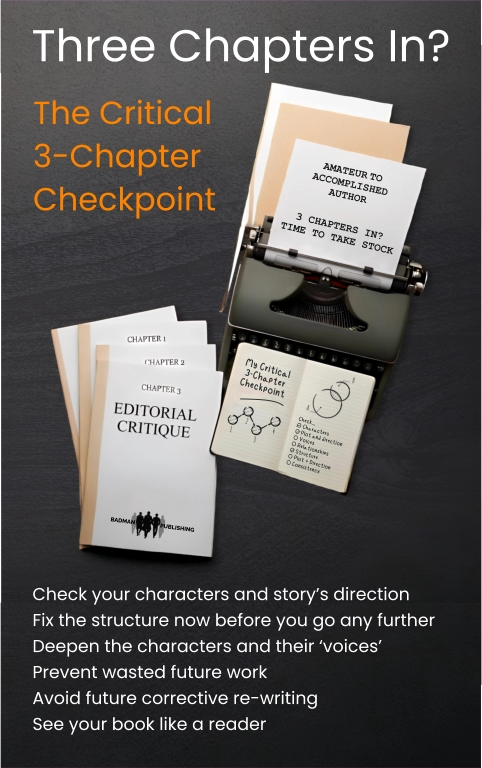
  • Use Badman Publishing's "Critical Three Chapters In Editorial Critique".
    Another way of saving time and money is taking stock once you have written your first three chapters. This can expose dead‑end subplots or worldbuilding ideas now, so you can adjust your informal outline or notes instead of cutting entire later chapters.
    More information including samples.

By doing everything you reasonably can on your own first, you make your editor’s job easier, reduce the total hours they need to spend, and often lower the final bill.

Final Thoughts

Editing is expensive because it’s intensive, skilled, and time‑consuming work that goes far beyond correcting a few typos. You’re paying for expertise, careful attention, and the thought your editor devotes to making your book the best version of itself—plus their right to a fair, sustainable income.

When you understand what goes into the process and take proactive steps to strengthen your manuscript beforehand, hiring a professional editor becomes less of a mystery and more of a strategic investment in your book’s success.

Three chapters in Featured image for Badman Publishing 1920x1080

Can we help you with writing, refining and/or publishing?

At Badman Publishing, we understand that navigating the world of independent publishing can be overwhelming — especially when it comes to budgeting for professional services. That’s why we’re committed to making your journey smoother, more affordable, and more empowering.

Whether you're looking for editorial support, design expertise, publishing guidance, or marketing tools, we offer a range of services, some of which are free, or low cost — tailored to independent authors like you. Our goal is to help you focus on what matters most: writing and sharing your story.

We’re here to support you. Reach out to us at Badman, or explore our resources and services pages to see how we can collaborate.

"Let’s bring your book to life — together."

Please feel free to share this page... Thanks :-)
The Critical 3 Chapter Check

The Critical 3 Chapter Check

Why we have written this article...

Unfortunately, we continue to receive manuscripts from independent authors who believe their book is ready to publish. Sadly, upon reviewing their manuscript, we find hundreds of errors that really should not be in the finished, ready-to-publish book.

What we find distressing is that some of these authors have paid, in some cases, substantial 'professional' fees to third parties to review, audit and edit their book.

Despite paying these fees for proof reading and corrective services, some of the manuscripts we receive are still full of spelling and grammar errors, character and plot inconsistencies and sometimes a little confusion and contradiction within the narrative.

In an effort to remedy this and provide a bit of advice and guidance, as well as a prfactical tool, this article is split into two sections:

1 - Three chapters in? - Why It's time to take stock.

Why it is critical to stop writing once you have written, and after self-editing, are happy with your first three chapters, or 1,000 words.

2 -The Three Chapters in Editorial Pack

Using our "3-Chapters in Editorial Pack" to provide an independent check of your manuscript, not just the spelling and grammar, but the key aspects of your writing that you need to check before continuing to write or submitting your pitch to a literary agent or Publisher.

Critical 3-Chapters-In Checkpoint

Three chapters in? - Why It's time to take stock.

Pausing your writing after three chapters, about one thousand words, lets you check that the story you are actually writing matches the story you think you are writing, before you invest tens of thousands more words in the wrong direction.

Why is doing this Critical 3-Chapter Check so important for your book?

The Critical 3 Chapter Check featured image for Badman Publishing

Check your story's direction

Those first chapters usually establish the premise, protagonist, and problem, so pausing lets you confirm the book has a clear hook and direction rather than a vague situation.

A short 'stock‑take' helps you see whether each chapter genuinely pushes the story forward, or whether you are wandering, repeating beats, or stalling in backstory and exposition.

Fix the structure now before you go any further

Three chapters is often enough to reveal structural issues like a slow start, unclear stakes, or missing inciting incident, which are far easier to fix now than after 60k words.

Looking at these chapters side‑by‑side lets you assess pacing and balance between scene, summary, and exposition so the opening act leads naturally into the middle of the book.

Deepen the characters and their 'voices'

By chapter three you usually understand your characters better than you did on page one, so revisiting the opening allows you to align their early behaviour and dialogue with who they have already become.

A pause helps you smooth out shifts in style or tone that creep in as you warm up, giving the book a more consistent narrative 'voice' from the outset.

Prevent wasted future work - avoid future corrective re-writing

Taking stock can expose dead‑end subplots or worldbuilding ideas now, so you can adjust your informal outline or notes instead of cutting entire later chapters.

Even if you are discovery writing, a brief review of what you have teaches you what the story wants to be, making future scenes easier and reducing the amount of heavy revision needed later.

See your book like a reader

Stepping back, even for a short time, lets you return to those chapters with enough distance to spot confusion, flat moments, or missing emotional beats that you were blind to while drafting.

Reading the first three as a continuous unit gives you a reader’s‑eye view of your opening act: would you, as a stranger, feel compelled to keep turning pages into chapter four?


The 3-Chapters-In Editorial Pack

Editorial Pack Featured image for Badman Publishing

To help you "take stock" of your story so far, you can upload the first three chapters of your manuscript.

We will analyse your submitted first three chapters and present you with the following:

1. A focused spelling and grammar check highlighting errors to remedy.

2. A full critique providing a critique of your story, checking character development, plot line, and writing style.

3. A one-page pitch document based on your first three chapters

4. A storyline and plot planner to help you refine and adhere to the plot lines and time lines

5. Access to our writing and publishing focused resources

The Editorial Pack (COMING 2026)

Click here for more information about your bespoke editorial pack contents, example documents and pricing. (Available January 2026)

[dsm_icon_list _builder_version="4.27.5" _module_preset="default" global_colors_info="{}"][/dsm_icon_list]
Please feel free to share this page... Thanks :-)
Do you know about these “unannounced” latest Amazon KDP Updates?  

Do you know about these “unannounced” latest Amazon KDP Updates?  

Amazon KDP (Kindle Direct Publishing) is constantly evolving. While many updates are announced, some significant changes occasionally slip under the radar, yet profoundly impact authors and publishers. Recently, two such unannounced updates have been identified, concerning:

- Best Seller Rank (BSR) updates, and

- Aggregated category ranks.

Understanding and adapting to these shifts is crucial for optimizing your publishing strategy and achieving long-term success. 

The new rhythm of Best Seller Rank (BSR) updates

For many years, authors have carefully tracked their BSR with interest, watching it fluctuate every hour or so. Monitoring this regularly updating monitoring tool, often dictated how promotion strategies were working as they provided a quick gauge of a book's performance. However, Amazon has recently and more importantly, quietly changed this.

From hourly to daily (or longer!)

The most significant change is frequency of how often the BSR is updated on the listing. Instead of near real-time changes, BSR is now updated a maximum of once per day, and in some cases, it can take up to two days for new rankings to reflect. This means that the instant gratification of seeing your BSR jump immediately after a big sale or promotion is a thing of the past.

What this means for authors: A paradigm shift in focus

This change isn't merely a technical tweak; it demands a strategic shift in focus for authors:

  • Less obsessing:
    The constant monitoring of the BSR can be a “time sponge”. With these new delayed updates, authors might be encouraged to redirect their energy from constantly checking their book rankings to other activities such as...
    • Marketing and Promotion:
      Dedicating more time to developing sustainable, medium and long-term marketing campaigns.
    • New Projects:
      Invest the saved time in writing and publishing new books, expanding your catalogue.
  • Promotions Still Matter:
    Don't misunderstand: Sales and downloads from promotional offers such as BookBub or Amazon Ads, are still registered by Amazon's algorithm. The internal mechanics of Amazon's sales tracking's algorithm remain in place; it is just the public display of BSR that has this 'delayed' effect. Your sales will still be calculated to display your book's overall performance.
  • Customer perspective is still a key factor:
    The vast majority of readers don't pay attention to BSR. They discover books through keywords, categories, and recommendations. Your focus should always be on optimizing these elements to ensure discoverability, rather than rely on BSR.
  • Amazon's algorithmic priority:
    Amazon's core objective is to sell books. Their algorithm will continue to prioritize and push titles that are generating sales, regardless of how quickly their BSR is visually updated. The internal weighting of new purchases, which helps newer books compete, remains a powerful factor.
  • Embrace Long-Term Strategy:
    This update strongly favours authors and publishers who approach their work as a sustainable business. Consistent, long-term marketing efforts, rather than sporadic, short-term ad bursts, will yield better results. It's about building momentum over time, not chasing fleeting rank spikes.

Aggregated Category Ranks: A game changer for visibility

The second, equally impactful update revolutionizes how category ranks are calculated. Previously, each format of a book (ebook, paperback, hardcover, audiobook) had its own independent category rank. Now, Amazon aggregates the activity across all formats of a title to provide a single, unified category rank.

How It Works:

Consider a popular book like "I Love You to the Moon and Back." Before this update, its Kindle, hardcover, and board book versions would each have separate BSRs and category ranks. Now, even if the individual BSRs differ significantly (e.g., Kindle at 108,000, hardcover at 5,000, board book at 28), all formats of that title will display a #1 ranking in their respective categories if the combined sales across all formats are strong enough. This is because Amazon is now combining the sales data from every format to determine the overall category standing.

Implications for Authors: Maximizing Your Reach

This aggregation has profound implications for how authors approach publishing and marketing their titles:

  • Visibility Boost for All Formats:
    This is a massive win for authors. If one format of your book performs exceptionally well (e.g., your ebook sells thousands of copies), its success will positively influence the category ranking of all other formats (e.g., your paperback or hardcover), even if those individual formats have lower sales. This can significantly increase the visibility of your less popular formats, leading to more organic discovery.
  • Strategic Format Creation:
  • Authors should now seriously consider creating multiple formats for their books, provided it aligns with their audience and content. For example:
    • Children's Picture Books:
      These often thrive in print or board book formats, even if the ebook version isn't as popular. Producing these formats can now directly boost the overall category standing for the entire title.
    • Non-Fiction:
      Offering paperback, hardcover, and audiobook versions can collectively contribute to a dominant category rank.
  • Integrated Marketing is Key: This update underscores the importance of an integrated marketing plan. Instead of promoting formats in silos, develop a strategy that promotes different versions of your book to various audiences. Every sale, regardless of format, contributes to a higher overall category ranking, creating a powerful synergistic effect. 

Adapting for long-term success

Unless you avidly follow Amazon KDP's advisory pages, these "unannounced" Amazon KDP updates may come as a surprise. However, when viewed positively these changes present significant opportunities for authors who are willing to adapt. The shift in BSR reporting encourages a healthier, less obsessive focus on constant rank checking, pushing authors towards more impactful marketing and creation. The future aggregation of category ranks, offers a valuable opportunity to boost visibility across all formats of your books, thus making sense to having a multi-format publishing strategy, with the performance of one format of your books positively effecting the overall BSR of your books.

Our advice and guidance

By understanding and leveraging these changes, authors can refine their strategies for long-term success on Amazon KDP. You should ideally be focusing on writing higher-quality content, doing consistent marketing, and improving formatting and visual impact. By concentrating on these, you will be well-positioned to thrive as an author and rise higher in such a crowded market.  evolving landscape.


Acknowledgements, Credits & Hat-Tips

Header image created in-house using a licensed original image from Adobe for editorial use. 

Article author: Badman Publishing Team

Next Steps

Check out our writing and publishing guides in our member's resource library. 


How we help independent and/or self-publishing authors

One can join us for free to access our knowledge base and self-help resources. Additionally, we offer optional, price-friendly professional services to assist you at various stages of your writing and publishing journey.

What we can help you with | Join us for free | Monthly Newsletter

Please feel free to share this page... Thanks :-)
The advantages of short sentences

The advantages of short sentences

-Hemingway believed in stripping every word and sentence down to its absolute essentials. Short sentences hit harder, leaving no room for confusion or fluff. Source: https://bdmn.pub/EH13

Short sentences are a powerful tool in writing because they enhance clarity and emotional impact by doing the following:

1. They Improve Clarity

Short sentences are easier to read and understand. They eliminate the clutter, helping readers grasp your ideas quickly without having to untangle complex syntax. Here's how:

  • Straight to the point:
    A short sentence gives information directly, reducing the chance of ambiguity.
  • Reduces cognitive load:
    Especially for online readers with short attention spans, brevity improves readability and focus.
  • Improves flow:
    Interspersing short sentences between longer ones creates a rhythm that guides readers naturally through your writing.

For example: "It was raining. The streets were empty."

This gets the scene across far faster than: "As a result of the intense rainfall, the streets seemed remarkably silent and empty of individuals".

2. They Raise Emotional Intensity

Short sentences:

  • Can convey a strong emotional effect by mirroring how people express themselves during moments of stress, shock, or heightened feelings.
  • Mimics authentic emotions:
    People tend to express themselves in brief messages when they are distressed, scared, or feeling overpowered. Short sentences replicate that emotional rhythm.
  • Builds tension:
    In moments of drama or suspense, abrupt sentences speed up pace and make your writing more gripping.
  • Highlights importance:
    A short sentence can serve as a dramatic pause or a takeaway moment, compelling readers to pay attention.

For example: "He didn’t call. She waited. Nothing." This conveys a stinging sense of disappointment far more effectively than a longer, descriptive paragraph.

3. They Create Contrast and Emphasis

Concise sentences grab attention when they are used intentionally and sympathetically with longer ones. The contrast draws attention, letting important points hit harder.

For example: "He wandered through endless streets, memories pulsing with each step. The city felt strange now—a collage of shadows and echoes of what used to be."

Can be shortened to: "He turned the corner. She was gone."

The brief concluding sentence delivers a powerful emotional impact specifically because it disrupts the earlier rhythm.

Tips for Using Short Sentences Effectively:

  • Don’t overdo it. Use variety to maintain rhythm and interest.
  • Use them to hammer home a point, not just for style.
  • Make sure each short sentence carries weight or advances the message.

Conclusion

To sum up, concise sentences serve as effective instruments—they enhance the clarity, cleanliness, and precision of your writing. Whether you’re blogging, storytelling, or writing persuasive content, using short sentences intentionally can make your message unforgettable.


Image credit

Created in-house using image purchased from Adobe stock


How we help independent and/or self-publishing authors

One can join us for free to access our knowledge base and self-help resources. Additionally, we offer optional, price-friendly professional services to assist you at various stages of your writing and publishing journey.

What we can help you with | Join us for free | Monthly Newsletter

Please feel free to share this page... Thanks :-)
Hemingway’s 13 methods for better writing.

Hemingway’s 13 methods for better writing.

Few writers have expressed clarity and strength in such a simple way as Ernest Hemingway is regarded as having done. His words cut straight to the point, making a lasting impact. In a world full of noise, his style stands out for its directness and power. Hemingway shows that less can be more, and a few words can leave a big mark. His writing remains a true example of how to say much with little.

His bold, minimalist approach remains as relevant to bloggers and copywriters as it is to novelists. Here are thirteen methods suggesting how Hemingway’s writing philosophy can sharpen your own writing style to bring clarity and a bit of punch to your prose.

1. Use short sentences

Hemingway believed in stripping every word and sentence down to its absolute essentials. Short sentences hit hard, leaving no room for confusion or fluff. Try cutting your sentences in half and see if the meaning still stands—most often, it will.

2. Prefer an "active voice"

Action propels a story. Hemingway’s writing is filled with direct, muscular prose. Choosing active voice instead of passive makes your sentences more engaging and direct. For example: “They found the key” vs. “The key was found”.

3. Show, don’t tell (The Iceberg Theory)

Perhaps Hemingway’s most famous rule is to show rather than tell. He supported the idea of the "iceberg theory," where only the top of the iceberg is visible while the true size of its bulk remains below the surface. Let your scenes and dialogue carry the emotion—don't spell everything out for the reader.

4. Pause while you are still inspired

Hemingway regularly stopped writing when he still knew what would happen next. This trick helps you maintain momentum for your next session—no blank page staring, just seamlessly continuing where you left off.

5. Write "One True Sentence"

Stuck? Hemingway focused on finding one honest and clear sentence—the most truthful thing he could say. Hemingway once said, “All you have to do is write one true sentence. Write the truest sentence that you know.” That simple truth would break the dam for the rest of the writing to flow.

6. Edit mercilessly

Great writing is rewriting. Hemingway was famous for his ruthless edits, once rewriting an ending dozens of times. Protect the reader, not your ego: cut anything that doesn’t add to the story.

7. Choose strong verbs

Verbs are the engines of sentences. Instead of using “walked slowly,” try “trudged” or “staggered.” A powerful verb can do the work of an adjective or adverb, painting a vivid picture with fewer words.

8. Limit the use of adjectives and adverbs

Extra modifiers dilute your writing. Hemingway challenged himself to strip them away. If a sentence survives (or improves) when you remove the adverb, let it go. Trust your nouns and verbs to deliver the impact.

9. Write a dialogue that rings true

In real conversations, people rarely explain themselves clearly—they tend to dodge questions, repeat themselves, and hesitate. Hemingway’s dialogue is spare and unfinished, mirroring real life. Cut as much exposition as you can and let subtext do the heavy lifting.

10. Write honestly about what hurts

Hemingway didn’t shy away from pain. He tackled tough topics directly, allowing emotions to resonate through actions instead of explanations. If it’s hard to write, it probably matters—and your readers will feel it.

11. Don’t judge your characters

Let your characters live without commentary. Hemingway gave them space to be flawed and real, trusting the reader to draw their own conclusions. This respect for his audience is part of what makes his work resonate.

12. Live fully, write truthfully

Hemingway’s stories were born from his own experiences—adventure, travel, love, and loss. Lasting writing stems from sharp observation and active engagement with life. Maintain your curiosity, keep paying attention to the story, and your writing will naturally mirror it.

13. Strip every sentence to the bone

Every word should justify its place on the page. If a passage doesn’t serve the story, cut it. Write with ruthless clarity—leave only what matters most.

Final Thoughts...

Hemingway’s legacy is proof that powerful writing comes not from saying more, but from carving away until only the essential remains. Whether you choose to follow one principle or all thirteen, let clarity, courage, and restraint shape your next draft. The result? Writing that connects and endures.

Whether you’re crafting a novel or refining a blog post, Hemingway’s method can revolutionize not just your writing process, but the way it resonates with your readers.

"Write honestly, write lean, and let every word count".


Image credit: Ernest Hemingway writing at Campsite in Kenya. Source: Wikipedia Commons listed as licensed under a free licence.


How we help independent and/or self-publishing authors

One can join us for free to access our knowledge base and self-help resources. Additionally, we offer optional, price-friendly professional services to assist you at various stages of your writing and publishing journey.

What we can help you with | Join us for free | Monthly Newsletter

Please feel free to share this page... Thanks :-)
The Basics of Self-Publishing: Fiction vs. Non-Fiction

The Basics of Self-Publishing: Fiction vs. Non-Fiction

Fiction Vs Non-Fiction

Self-publishing has revolutionised the way authors bring their stories, knowledge and expertise to their readers. Whether you write fiction or non-fiction, the process is more accessible than ever. For fiction authors, self-publishing offers creative freedom and the ability to reach both general and niche audiences. Non-fiction writers benefit from establishing authority and sharing specialised knowledge directly with their target audience, readers who will benefit from their sharing.

The benefits of creative freedom and authority

For fiction authors, self-publishing opens up a world of creative freedom. You’re no longer constrained by the tastes and preferences of literary agents or publishing houses. Instead, you can write the stories you want to tell and connect with niche audiences who share your interests. Whether you’re exploring new genres or experimenting with unique voices, self-publishing puts you in the driver’s seat.

Non-fiction writers also benefit greatly from self-publishing. By sharing your expertise directly with readers, you can establish yourself as an authority in your field. Whether you’re writing a how-to guide, a memoir, or a business book, self-publishing allows you to deliver specialised knowledge to your target audience quickly and efficiently.

The differences between fiction and non-fiction

While the core process is similar, there are some key differences:

  • Non-fiction often requires additional research and may benefit from including references, citations, or an index to help readers navigate your content.

  • Fiction relies more on world-building, character development, and storytelling techniques to engage readers.


Key Steps in the Self-Publishing Process

1. Write and Edit Thoroughly

Begin by writing your manuscript, focusing on creating compelling content regardless of genre. Once your draft is complete, revise it multiple times to improve clarity, flow, and style. Consider enlisting beta readers for feedback and hiring a professional editor to catch grammatical errors, inconsistencies, and structural issues. A polished manuscript is essential for making a strong impression on readers and building your reputation as an author.

2. Design a Professional Cover

Your book’s cover is a crucial marketing tool—it’s often the first thing potential readers notice. Invest in a professional cover designer who understands your genre and target audience. A well-designed cover should be visually appealing, accurately reflect your book’s content, and stand out in online marketplaces. Remember, a high-quality cover can significantly influence purchasing decisions.

3. Format for Print and Digital

Proper formatting ensures your book is readable and visually appealing in both print and digital formats. For print, this includes setting correct margins, font choices, and page numbers. For ebooks, format your manuscript so it displays correctly on various devices, such as Kindles, tablets, and smartphones. Many authors use formatting tools or hire professionals to handle this technical step, ensuring a smooth reading experience for all audiences.

4. Choose a Self-Publishing Platform

Select a self-publishing platform that aligns with your goals. Major platforms include Amazon Kindle Direct Publishing (KDP), Barnes & Noble Press, and Apple Books. Each offers different royalty structures, distribution options, and promotional tools. Research the requirements and benefits of each platform before making your choice. Some authors publish on multiple platforms to maximize reach, while others focus on a single service for simplicity or exclusivity.

5. Set Up Book Metadata and Pricing

Prepare your book’s metadata, including the title, subtitle, author name, book description, keywords, and categories. This information helps readers find your book online and influences its visibility in search results. Set a competitive price based on your genre, book length, and market research. Consider offering promotional pricing or free periods to attract early readers and reviews.

6. Publish and Promote

Once your book is uploaded and approved, launch it to the public. Develop a marketing plan that includes building an author website, engaging with readers on social media, and seeking book reviews. Utilize promotional tools offered by your chosen platform, such as Amazon’s Kindle Deals or advertising services. Ongoing promotion is key to reaching a wider audience and achieving sustained sales.

7. Monitor Sales and Gather Feedback

After publication, track your sales data and reader feedback. Use this information to refine your marketing strategies and improve future books. Respond to reviews and engage with your audience to build a loyal readership. Consider updating your book or releasing new editions based on constructive feedback and market trends.

Self publishing process 1

Final Thoughts

Self-publishing is a powerful tool for writers of all genres. Whether you’re crafting a novel or sharing your knowledge, expertise and/or research, the process is now within reach for anyone with a story to tell or information to share. By following the above steps and adopting the opportunities self-publishing offers, you can bring your work to readers around the world and make your mark as an author.

Can we help you?

You can join us for free to access our knowledge base and self-help resources. Additionally, we offer optional, price-friendly professional services to assist you at various stages of your writing and publishing journey.

What we can help you with | Join us for free


Please feel free to share this page... Thanks :-)
Why Are Semicolons Disappearing? The Decline of a Classic Punctuation Mark

Why Are Semicolons Disappearing? The Decline of a Classic Punctuation Mark

Once a staple of elegant prose and academic writing, the semicolon (;) is quietly slipping out of everyday use. While it still appears in formal essays and literary works, its presence in emails, blogs, and even published books is dwindling. What’s behind this shift, and does it matter?

The Rise and Fall of the Semicolon

The semicolon’s original purpose was to connect closely related independent clauses; it served as a bridge between thoughts that were too intertwined for a period, yet too distinct for a comma. In the 19th and early 20th centuries, writers like Virginia Woolf and Charles Dickens wielded semicolons with flair, crafting intricate sentences that demanded careful reading.

Today, however, the semicolon is often seen as fussy or even pretentious. Many writers, especially online, prefer short, punchy sentences. The digital age, with its emphasis on speed and clarity, rewards brevity. Social media platforms, text messages, and even professional emails are dominated by simple structures and straightforward punctuation.

Changing Style Guides and Readability

Modern style guides reflect this trend. The Associated Press (AP) Stylebook, widely used by journalists, recommends using semicolons sparingly. Readability tools like Hemingway and Grammarly often flag semicolons as potential stumbling blocks for readers, suggesting writers break complex sentences into shorter ones.

There’s also a generational shift at play. Younger writers, raised on tweets and instant messages, rarely encounter semicolons in the wild. As a result, many are unsure how or when to use them, opting instead for periods or conjunctions.

Does It Matter?

Is the decline of the semicolon a loss for language? Some purists argue that it narrows our expressive range, making it harder to convey subtle relationships between ideas. Others see it as a natural evolution: language adapts to the needs of its users, and if semicolons no longer serve a clear purpose, perhaps it’s time to let them go.

For now, the semicolon remains a useful tool for those who appreciate its nuance. But in a world that values speed, clarity, and accessibility, its role is undoubtedly shrinking.

So next time you reach for a semicolon, consider your audience. Will it add clarity, or just slow your reader down? The answer may determine whether this classic punctuation mark survives—or fades quietly into history.

Please feel free to share this page... Thanks :-)
The rise of digital reading is creating opportunities for independent authors

The rise of digital reading is creating opportunities for independent authors

In recent years, the world of reading has undergone a significant shift towards digital formats, with both ebooks and audiobooks experiencing remarkable growth. This trend presents exciting opportunities for indie authors, particularly those with limited budgets.

The preference for ebooks appears to be continuing to grow. We read that by 2028, it is projected that 1.1 billion readers will prefer ebooks over traditional print books. This preference is largely driven by the better affordability and accessibility of ebooks. Unlike physical books, ebooks can be accessed from any compatible devices such as PCs, tablets, phones, dedicated readers, etc., making them a convenient choice for readers worldwide.

So what does this mean for Independent (Indie) Authors?

For indie authors, ebooks offer a more cost-effective way to publish their work. Without the need for printing and shipping, ebooks can be produced and distributed at a fraction of the cost of physical books. This not only saves money, but also allows authors to reach a global audience more efficiently. Whether you're a debut author or an established writer, ebooks provide a platform to test the waters and build a readership without 'breaking the bank'.

Audiobooks are also booming. The audiobook market is another area experiencing rapid growth, with an annual increase of 26.4% expected over the next seven years. Audiobooks offer readers the flexibility to enjoy books while engaging in other activities, such as exercising or commuting. This format is particularly appealing as it allows listeners to immerse themselves in stories even when their hands are busy.

Creating an audiobook version of your work is now easier than ever before. With continuing improvements in user-friendly apps and web-apps, producing high-quality audiobooks is both fast and accessible. For indie authors, this presents a unique opportunity to expand their audience reach and tap into a growing market. If you haven't already, now is the perfect time to consider converting your book into an audiobook format.

Conclusion

The digital revolution in reading is opening new doors for indie authors. Whether through ebooks or audiobooks, the ability to reach a vast audience without significant financial barriers is a game-changer. As the demand for digital content continues to rise, embracing these formats can help authors build a loyal readership and achieve success in the constantly evolving reading landscape.

How should indie authors adapt to the digital revolution in publishing

Next steps

  • If you haven't done this before, can we help you convert your book into an optimised e-book or create an audiobook (or both!)
  • To save you time, we could do it for you and help you publish.
  • If you are not a member already, you can join us for free and access all our free resources (See below)


Acknowledgements, Credits & Hat-Tips

Header image created in-house from an original Freepick image.
Article author: Desktop Dan
Article is written in UK English.

Next Steps

Check out our writing and publishing guides in our member's resource library. 

Latest Resources for Free Members

  • Common mistakes made by self-publishing authors [Guide]
  • 8 Essential Steps to Format Your Book in MS Word [Guide]
  • How to use PowerPoint to Outline Your Book [Guide]
  • Outlining to create your manuscript [Guide]
  • Story Planning Checklist [Printable PDF]
  • Character Creation Checklist [Printable PDF]
  • Five Steps to Publishing. [eBook. & PDF]
  • The importance of book covers [Guide]
  • The Benefits of Blogging for Self Publishing Authors [Guide]
Please feel free to share this page... Thanks :-)
Top Genres in Self-Publishing for 2025

Top Genres in Self-Publishing for 2025

[ 469 words. Approximately 4 minutes reading time.]

Top trending genres 2025

According to stats from Amazon KDP, Audible, and 2025 Genre Reports, these are the current trending genres and "micro-genres" in the world of independent publishing authors so far this year.

#1 Romance (32% of Sales)

Romance novels continue to dominate book sales. Dark romance appears to be especially popular right now. Mafia stories, bullying romances, and 'paranormal love' are trending big on TikTok at the moment, with hashtags like #DarkBookBoyfriend helping to drive this trend.

Audible is also seeing an increase in 'dark romance' audiobooks. 'Cosy and quirky' stories also do well. Books about baking grandmas are selling. Small-town romance novels also win many hearts. These 'cosy' books add over $2 million each month in direct sales.

#2 Fantasy (24% Market)

Fantasy books hold a strong place in the market. 'Romantasy' is a huge trend where magic is mixed with steamy romance. 67% of the top books blend these elements. Another growing area is LitRPG, short for literary role-playing game, which is a literary genre combining the conventions of computer RPGs with science-fiction and fantasy novels. Gamers appear to enjoy stories with levelling up. Skill trees and magic systems are also key. The LitRPG industry is currently worth $890 million!

#3 Sci-Fi (18% Growth)

Sci-fi books are growing in popularity. Climate stories are soaring right now. 'Solarpunk' thrillers are selling well. Eco-horror is also up 330% since 2022. Cozy space adventures also attract readers. These books feature low-stakes interstellar life. One book can make $4,000+ each month.

#4 Mystery/Thriller (15% Share)

Mystery and thriller books also have a solid share. Modern cozy mysteries are popular. These might feature grandma detectives. They might solve crypto crimes. Or they might tackle witchy cold cases. Tech terror also drives sales. AI villains are a common theme. CRISPR murders also appear in stories. These tech themes drive 73% of thriller pre-orders.

#5 Horror (12% Boom)

Horror books are booming, too. Stories about trauma are very popular. Books about mental health also do well. These outsell typical slasher stories. Monster romance is also a trend. Ethical werewolf love is popular. This attracts 33% of new horror readers.

Hidden Gems

Some niche genres are surprisingly successful. 'Dinosaur shifter' romance exists. And it makes $8.7 million each year. K-Drama books are also growing fast with embedded K-pop soundtracks helping this along. They drive 490% growth. 'African futurism' is also one to watch. Nigerian authors are leading the way.

Why are these genres winning?

Micro-Genres: Tiny niches (like cosy space opera) = loyal fans.  TikTok, Instagram, etc. are carrying 'bite-sized' chapters, and viral tropes are driving sales.

What can we conclude from this research? Readers appear to crave emotional, human stories. Niche + Authenticity = Sales!

| Write what you love, but use data to find your crowd!


 Visual Selection (8)

Acknowledgements, Credits & Hat-Tips

Header image created in-house.
Article author: Desktop Dan
Written in UK English so spelling may differ.

Next Steps...

Check out our writing and publishing guides in our member's resource library. 

Latest Resources for Free Members

  • Common mistakes made by self-publishing authors [Guide]
  • 8 Essential Steps to Format Your Book in MS Word [Guide]
  • How to use PowerPoint to Outline Your Book [Guide]
  • Outlining to create your manuscript [Guide]
  • Story Planning Checklist [Printable PDF]
  • Character Creation Checklist [Printable PDF]
  • Five Steps to Publishing. [eBook. & PDF]
  • The importance of book covers [Guide]
  • The Benefits of Blogging for Self Publishing Authors [Guide]
Please feel free to share this page... Thanks :-)