Writing Amazon Book Descriptions That Actually Sell

Writing Amazon Book Descriptions That Actually Sell

[1,265 words. Approx 5 to 6 minutes reading time.]

Struggling to craft the perfect Amazon book description? Discover the secrets to writing compelling descriptions that captivate readers and drive book sales. Learn why the first few lines are crucial, how to create an emotional connection, and the importance of a conversational flow. Get real-world examples, technical tips on keyword usage, and advice on social proof and call-to-action strategies. Unlock the power of a well-crafted description and transform browsers into buyers with our expert insights.

Let's talk about something that many self-published authors struggle with – writing the perfect book description for Amazon Books. You know what we mean - that make-or-break text that either convinces someone to buy your book or sends them clicking away to the next title on the list. We’ve spent time helping authors with this, and have experienced firsthand what works and what falls flat.

Something you need to realise about Amazon book descriptions – they're nothing like what you learned about writing book summaries in school. Think of them more like those convincing notes you wrote to your parents when you really wanted something. You had to grab their attention, make your case, and leave them nodding in agreement. That's exactly what we're aiming for when writing an Amazon book description.

The first impression matters more than you think

As you probably know, you have only a few seconds to impress someone when you meet them? Your book description has even less time. Those first few lines are crucial. Imagine you’re talking to someone at a coffee shop who has just asked, "So, what's your book about?" You wouldn't start with a lengthy explanation of your world-building – you'd lead with the good stuff.

If you are writing a fiction novel, this might mean jumping straight into your main character's biggest dilemma. If you've written a thriller, maybe it's the moment your protagonist discovers they're being watched.

If you are a non-fiction authors, how about starting with the problem that keeps your readers up at night. If you've written a business book, address that frustration your readers feel every day at work.

Making your description flow like a conversation

Nobody likes reading big blocks of text – especially on their phone whilst probably multi-tasking or in between activities. The advice is to break up your description as if you are telling a story to a friend. Use short paragraphs and punchy sentences. Think about how you'd explain your book to someone over coffee.

When working with authors in the past we have used a technique used by editors and proof readers, suggesting they read their description out loud. If they run out of breath or start stumbling over words, that's an indication that things need to be simplified a bit. Your description should feel natural, like you're enthusiastically telling a friend about this amazing story or solution you've created.

Emotional connection.

Here's where some authors miss the point – they focus too much on plot points or features instead of emotional impact. Think about why you yourself read books. Maybe it's to feel less alone, to escape everyday life, to find solutions to problems that have been bothering you. Maybe your description needs to tap into these deeper motivations rather than just the features.

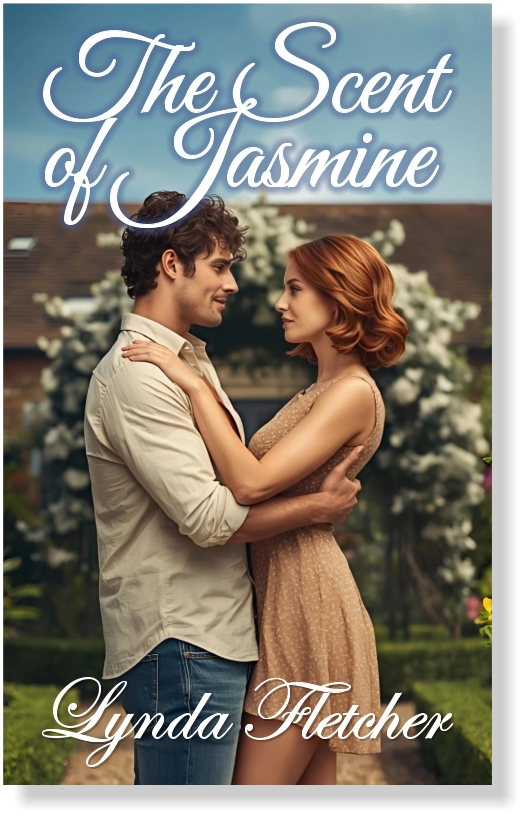
For example, let’s say you have written a romantic novel. Don't just tell us “Two people meet and fall in love.” Help us feel the electricity and excitement of their first encounter, the impossibility of their situation, the stakes if they can't make it work.

Writing a self-help book? Don't just list your tips – help us imagine how much better my life could be after reading your content.

Real-world examples in action.

Let’s share a few good examples we’ve come across. One romance author is said to have transformed her flat description from "Jane meets John at a coffee shop" to "Jane wasn't looking for love when she spilled her soya latte all over the gorgeous stranger's laptop – she was just trying to survive another Monday. But now she owes him a computer... and he's demanding payment in the form of dinner dates." – Nice!

For non-fiction, a business author changed his opening from "Learn productivity techniques" to "Imagine finishing your workday at 4pm, knowing everything important is done – without working through lunch or missing your kid's soccer game. This isn't a fantasy; it's what happens when you master the techniques in this book." – good advice!

The technical stuff that actually matters.

Keywords really matter for Amazon searches, but don't get obsessed with cramming them in everywhere, known as “keyword stuffing”. Instead, how about thinking of keywords as seasoning – using enough to enhance the flavour, but not so much that it overpowers the meal. Include natural phrases that readers actually search for, but never at the expense of readability.

For example, if you're writing a mystery novel, naturally weave in terms like "psychological thriller," "suspense," or "whodunit" where they make sense. If you've written a cookbook, include terms like "quick meals," "family dinner," or "healthy recipes" in ways that flow with your description.

Making it believable.

“Social proof” isn't just marketing jargon – it's about showing readers they can trust you with their time and money. If other people have loved your book, say so. If you're an expert in your field, let us know (but keep it humble – nobody likes a boaster). Think of it as building trust, just like you would in any relationship.

An example author included a simple but effective line: "Join the 10,000-plus readers who have transformed their morning routine with these proven techniques." Another mentions: "Featured in Forbes and recommended by New York Times bestselling author Jane Smith."

Add your call to action.

Your call to action (CTA) doesn't have to sound like a late-night infomercial. Instead of "Buy now!" think about what your reader really wants. "Start your adventure," "Transform your business," or "Begin your journey" can feel more inviting and personal. Authors have seen great success with lines such as "Turn the page on your next adventure" or "Take the first step toward the business you've always dreamed of building."

Testing and tweaking.

Here's a realisation that many authors miss at first – your first version probably won't be perfect, and that's okay. Think of your description as a conversation with your readers and pay attention to what they're writing in reviews, what questions they're asking, and how they describe your book to others. Use this feedback to refine your description over time.

Authors have been said to have increased their sales by 30% just by tweaking their descriptions based on customer feedback. One author reported that readers kept mentioning a specific character in reviews, so he revised his book’s description to feature that character more prominently. Another realised that readers were particularly drawn to a specific technique mentioned in her self-help book, so she highlighted that technique earlier on in the description.

Common pitfalls to avoid.

Sharing some mistakes that many authors have made and continue to make. Firstly, don't give away too much of the plot – you want to intrigue readers, not tell them the whole story. Secondly, avoid generic phrases like "in this book" or "this is a story about" – jump straight into the meat of your description. Finally, don't forget to proofread carefully; nothing kills credibility faster than typos in your description.

Crafting Compelling Book Descriptions

Takeaways.

The truth is, writing a great book description is more art than science. It's about finding that sweet spot between informing and enticing, between professionalism and personality. Keep it genuine, focus on your reader's needs, and don't be afraid to let your own voice shine through. After all, that's what makes your book unique in the first place.

Remember, at the end of the day, you're not just selling a book – you're inviting readers into an experience. Make that invitation as impossible to resist as possible, and they'll be much more likely to accept it. Take the time to craft something that genuinely represents your book while speaking directly to your ideal reader's desires and needs.

| And that's how you turn browsers into buyers!

Acknowledgements, Credits & Hat-Tips

Header image created in-house.
Article author: Badman Publishing Team
Article is written in UK English so spelling may differ.

Next Steps

Check out our writing and publishing guides in our member's resource library. 

Latest Resources for Free Members

  • Common mistakes made by self-publishing authors [Guide]
  • 8 Essential Steps to Format Your Book in MS Word [Guide]
  • How to use PowerPoint to Outline Your Book [Guide]
  • Outlining to create your manuscript [Guide]
  • Story Planning Checklist [Printable PDF]
  • Character Creation Checklist [Printable PDF]
  • Five Steps to Publishing. [eBook. & PDF]
  • The importance of book covers [Guide]
  • The Benefits of Blogging for Self Publishing Authors [Guide]
Please feel free to share this page... Thanks :-)
How long does it take to write a novel?

How long does it take to write a novel?

The time needed for an author to write a fiction novel varies significantly based on several factors.

We understand that most authors who write full-time typically spend about two to six months to complete their first draft. This time frame can vary based on several factors, including the author's writing habits, experience, and the complexity of the story. Some authors may have a clear vision and write quickly, while others might require additional time to organize their thoughts or develop their characters.

Every writer has a unique process. For some, the initial draft is just the beginning of refining their ideas. They might work best with a structured schedule, dedicating specific hours each day to focus solely on writing. Others may prefer a more flexible approach, allowing inspiration to guide them.

In addition, the genre of the book may influence how long it takes to finish the draft. A novel with intricate plots, multiple characters, or detailed world-building can demand more time than a straightforward narrative. Authors often find themselves revisiting and revising sections, which adds to the overall duration.

Every writer understands that the first draft is not the final product. It serves as a foundation for future revisions, edits, and improvements. Therefore, whether it takes two months or six, the goal remains the same - to create a solid draft that can evolve into a polished piece of work.

The further time needed to complete the manuscript with revisions would take an estimated six months to two years depending on the number of words and the revision methods used.

Professional authors tend to write to deadlines, often completing books in three to twelve months. Part-time writers may take two to five years.

Timeline For Writing A Novel An Article By Badman Publishing

There are a number of factors affecting the whole writing timeline.

  • What is the author's writing experience?
  • The amount of time available if not dedicated or scheduled to writing every day.
  • The length of the novel is another time factor. A novel is typically 70,000-100,000 words.
  • Is there any research involved? Historical novels such as "The Bootlegger" by self-published author Keith Lawson, required a considerable amount of research, background reading, contacting third parties with questions, etc.
  • The novel's revision process, third-party reviews, corrections, re-writing, and improvements will also take a fair time to complete.

It's said that Stephen King typically writes first drafts in 3-4 months, while George R.R. Martin has spent over 10 years on recent books.

In conclusion, there's no universal timeline - each author and book has different requirements, and all the time spent is conducive to an excellent and well received novel.

Acknowledgements, Credits & Hat-Tips

Header image created in-house using a licensed original image by XXXXXXXXX
Article author: Badman Publishing Team

Next Steps

Check out our writing and publishing guides in our member's resource library. 

Latest Resources for Free Members

  • Common mistakes made by self-publishing authors [Guide]
  • 8 Essential Steps to Format Your Book in MS Word [Guide]
  • How to use PowerPoint to Outline Your Book [Guide]
  • Outlining to create your manuscript [Guide]
  • Story Planning Checklist [Printable PDF]
  • Character Creation Checklist [Printable PDF]
  • Five Steps to Publishing. [eBook. & PDF]
  • The importance of book covers [Guide]
  • The Benefits of Blogging for Self Publishing Authors [Guide]
Please feel free to share this page... Thanks :-)
Author’s Success after 5,000 Rejections

Author’s Success after 5,000 Rejections

After receiving 5,000 rejection letters, Angela Marsons spent 25 years trying to get her novel published. She faced constant setbacks but finally found success. Now, she has sold circa six million copies of her thrillers set in the UK's Black Country.

Angela Marsons is a British crime fiction author who, after years of perpetual rejections, turned her dream to write into a huge success story. Born in the Black Country region of the West Midlands, she worked as a security manager for 19 years before pursuing her passion for writing.

Angela discovered her love for storytelling in junior school, where she was known for observing people and creating stories. Her early writing attempts included relationship-based novels and short stories, but she faced numerous rejections from traditional publishers.

Despite receiving countless rejection letters over 25 years, she never gave up on her dream.

Things finally came to a head for Angela in September 2014: made redundant, in extreme financial difficulty, and even refused employment in an Amazon warehouse, her hopes of being an author appeared to be over when she parted company with one of London's top literary agencies. Publishers variously said "We love it, but not enough", some voicing unease about her Black Country setting and her lead character, Detective Kim Stone.

Everything changed in October 2014, when publisher Bookouture emailed her about Silent Scream. Within a week, she signed a deal for the first four books in the Kim Stone series. Just four months later, Silent Scream became a UK Kindle number one bestseller. That one book has since sold over 1.1 million copies, and the Detective Kim Stone series has sold more than 5.7 million copies worldwide.

After all those rejections, Angela has now sold over 5.7 million books. Her books have topped bestseller lists and have been translated into 31 languages. In addition, Angela has secured a BBC television adaptation of her Kim Stone series.

She said that her success was due to the authenticity of the writing and explained, "I decided to write a story just for me. I set the book in my local area and offered an ear to a character that had been nagging me for years."

She is still writing, with her 20th in this series, titled Guilty Mothers, being published, again proving the point that perseverance combined with authenticity can, finally, result in great success.

Acknowledgements, Credits & Hat-Tips

Header image created in-house using a licensed original image
Article author: Badman Publishing Team

Next Steps

Check out our writing and publishing guides in our member's resource library. 

Latest Resources for Free Members

  • Common mistakes made by self-publishing authors [Guide]
  • 8 Essential Steps to Format Your Book in MS Word [Guide]
  • How to use PowerPoint to Outline Your Book [Guide]
  • Outlining to create your manuscript [Guide]
  • Story Planning Checklist [Printable PDF]
  • Character Creation Checklist [Printable PDF]
  • Five Steps to Publishing. [eBook. & PDF]
  • The importance of book covers [Guide]
  • The Benefits of Blogging for Self Publishing Authors [Guide]
Please feel free to share this page... Thanks :-)
Latest Guides & Help Sheets

Latest Guides & Help Sheets

We have a number of helpful resources for our free members. Below is our list of latest guides, help sheets, ebooks, and templates that will help self publishing authors, not just through Badman Publishing but also those doing everything themselves. (Newest on top)

Resources Library Header Image For Badman PublishingLatest Resources for Free Members

Common mistakes made by self-publishing authors [Guide]

How to use PowerPoint to Outline Your Book [Guide]

Outlining to create your manuscript [Guide]

Story Planning Checklist [Printable PDF]

Character Creation Checklist [Printable PDF]

Five Steps to Publishing. [eBook. & PDF]

The importance of book covers [Guide]

The Benefits of Blogging for Self Publishing Authors [Guide]

Click here to open our resources page.
Please note you will need to register as a free member in order to access these resources

Please feel free to share this page... Thanks :-)
Earn up to an extra £6,600pa as a registered writer

Earn up to an extra £6,600pa as a registered writer

If you are a published author, illustrator, editor, translator or audiobook narrator you could receive remuneration as a result of public library book loans. This could be up to £6,600 per year if you register for the UK Public Lending Right (PLR) scheme.

To be eligible for PLR you need to meet the following criteria:

  • be named on a book’s title page or be entitled to a royalty payment from the publisher (please note you do not have to own the copyright)
  • your only or principal home must be in the UK or in any of the other countries within the European Economic Area (i.e. EC Member States plus Iceland, Norway and Liechtenstein) at the time of registration (for UK PLR only)
    or
    you may be a resident or a citizen of any of the countries within the EEA or UK. If you are not an EEA resident and are applying for Irish PLR as a citizen, a photocopy of your passport can be used to confirm your citizenship within the EEA (for Irish PLR only)
  • your material must be registered with a valid ISBN number (ASINs are not eligible as they are only used by Amazon) and must have been published.

If you're eligible you can register all the books you've contributed to for both UK and Irish PLR using a single account.

Please make sure that you sign up by 30 June 2025 to be included in this year’s calculations."

Please note: Books have to have an ISBN not the Amazon ASIN alone.

Please feel free to share this page... Thanks :-)
Writing “The Bootlegger of Illinois”

Writing “The Bootlegger of Illinois”

My journey from inspiration to research and publication.

In writing my first ever fiction book, I took a very leisurely approach (no contracts, deadlines or publisher chasing me). So as not to lose the idea, I jotted down some notes as to the plot and some ideas about the storyline. One was that Jesse would be a veteran and have some military skills and Sheriff Buckley would feel beholden to him for trying to save his son.

When I went back to my notes, I decided on an ambush from cover of the gangsters visiting Jesse's farm, so it was logical to make him a WW1 sniper. That was all I had when, in the UK lockdown for the Corona Virus (Covid19), I picked up the excellent Nicholas Rankin's “Churchill's Wizards – The British Genius for Deception 1914-1945 (Faber & Faber 2008). This wasn't research – just my interest in military history. In the first part of the book, the amazing Hesketh-Prichard appeared – an advocate for sniping and founder of the Sniping, Observation and Scouting school. From that piece of serendipity I found (free online from the Open Library) Prichard's own publication “Sniping in France – with notes on the scientific training of scouts, observers and snipers” 1920 Hutchinson & Co.  What had been intended as an explanation for Jesse's skills with a rifle, became a bigger part of the book as I incorporated the SOS experience into the story.The Bootlegger Of Illinois On Tablet And Print From Dadman Publishing

As my writing developed, I saw that I needed more on the Chicago crime scene of the 1920s, as writing about Jesse's and Buck's region would not fill the book. Luckily, I found another excellent book “Al Capone's Beer Wars – a complete history of organized crime in Chicago during prohibition” by John H. Binder (pub Prometheus 2017). This helped correct many misconceptions I had from reading books years ago and watching movies. A big surprise was the youth of the mobsters – many in their twenties or only just in their thirties.

I am extremely grateful to Mr Binder for informing me about the Whiskey Rebellion (Western Pennsylvania 1791), the Lager Beer riots (Chicago 1855) and that by 1917 thirteen states had gone “dry” due to the Temperance movement, but that did not mean all were alcohol free, some having a prosperous illegal trade. In 1906 residents of Chicago drank nearly three times more than the national average. It confirmed, for me, that I had a workable plot.

Another book that proved invaluable was “Mr Capone” by Robert J. Schoenberg (pub Robson Books, 1992). Short of going to Chicago (which would have been fantastic) I had to rely on immersing myself in good histories.

I’d finished a draft, the complete story told but still needing the embellishment to keep the reader interested, when I picked up “The Mafia – the first 100 years” by William Balsamo & George Carpozi Jr (pub Virgin Books – Penguin – 1988). Apart from being slightly horrified that the title suggests we’ll have the Mafia for another 100 years, I did draw comfort for Sean O’Leary’s actions at the end with this statement:

“It is axiomatic in some sectors of the underworld community that revenge is sweeter when it is not taken against the person who committed the harm…..the theory is, it is better instead to take the life of someone near and dear to him.”

To keep me in the period, I noted the big events of each year on a page before the action and decided not to delete when I completed the story, as I felt they added background, especially for you, the reader, who may not be versed in American history. However, on another rewrite and some feedback from Beta readers, I did delete.

While working on the drafts, I was also reading the excellent “Forensics – The anatomy of crime” by one of my favorite authors – Val McDermid. I do recommend this to any fan of crime fact or fiction. It is so superior to the memoirs I had recently read by a pathologist. It jogged my memory about Edmond Locard (who first came to my notice in the Lincoln Rhymes series of books by Jeffery Deaver) and also Song Ci, whom I had read about in a fictionalized story of him, plus an episode of BBC's Silent Witness. That gave me material to fill out more of Jesse's back history and his skill at deleting evidence.

As an afterthought, I wonder if “whisky chasers” originated during Prohibition, the legally produced “near beer” being boosted by neat alcohol in a process known as “needling.” Just a thought.

Keith Lawson

Copies To The Mob MuseumYou are welcome to download and read a chapter of "The Bootlegger of Illinois" free of charge

Just click on the image below to download the PDF which we hope you will enjoy.

Acknowledgements & Hat Tips

Authors: Keith Lawson (Authors page
Images: Images created inhouse
Further reading:
- Publication page with links to where to purchase
- Reader Reviews on goodreads.com and The Mommies Reviews

Free chapter of The Bootlegger of Illinois

The Bootlegger Of Illinois On Tablet And Print From Dadman PublishingExplore the story of two men with different ideals and purposes but both strong and courageous trying to survive and prosper in prohibition era American state of Illinois.

When their worlds meet, violence is unleashed. Jesse has to pushback against the mobsters and bloodshed in his neighbourhood has him travelling to the City to deal with the mob boss to protect his friends.

Please feel free to share this page... Thanks :-)
To Serif or Not to Serif

To Serif or Not to Serif

Which is best? It depends...

The choice of font is crucial and should be tailored to your unique requirements, especially regarding the nature of the content you are sharing. Different fonts can convey different feelings and can affect how your message is received. For example, a formal document may benefit from a classic serif font, while a vibrant graphic might call for something more playful and contemporary. It is beneficial to experiment with several font options. By doing this, you can discover which font enhances readability and engagement for your audience. Testing various fonts will help you determine which one allows readers to easily absorb the information you are presenting, ensuring they have a positive experience with your content.

When choosing between serif and sans serif fonts for eBooks, it is important to understand that each type of font has its own unique benefits. The decision on which font to use often relies on the specific situation in which it will be applied as well as the individual tastes of the reader or publisher.

Serif Fonts

Times New Roman Sample.svg

Serif fonts, characterized by small lines or decorative features at the ends of their letters, can provide a classic and formal appearance. These fonts are often viewed as more traditional and can enhance the reading experience by guiding the reader's eyes along the lines of text.

Many people believe that serif fonts improve readability, especially in printed materials.

  • Readability:
    Serif fonts, such as Times New Roman and Georgia, are traditionally used in print because the serifs (small lines at the ends of characters) can help guide the reader's eye along the lines of text, potentially improving readability.
  • The Classic Look:
    Serif fonts provide a classic, formal look, which can be appealing for certain types of content, such as literary works or academic texts.

Sans-Serif Fonts

Sourcesanspro Sample.svgOn the other hand, sans serif fonts, which lack these embellishing details, offer a clean and modern look. They are typically easier to read on screens, which is particularly relevant in the context of eBooks that are frequently read on various digital devices.
The simplicity of sans serif fonts can make text appear clearer and more accessible, especially when dealing with smaller sizes or lower screen resolutions.

      • Modern and Clean:
        Sans serif fonts, like Arial and Helvetica, have a modern and clean appearance, making them popular for digital content.
      • Screen Display:
        They tend to display better on screens, especially at smaller sizes, because they lack the intricate details of serifs that can become blurry or pixelated.
      • Versatility:
        Sans-serif fonts are versatile and can be used for a wide range of content, from casual to professional.

Best for eBooks

When choosing between serif and sans serif fonts for eBooks, it is important to understand that each type of font has its own unique benefits. The decision on which font to use often relies on the specific situation in which it will be applied as well as the individual tastes of the reader or publisher.

    • Sans Serif for Digital:
      For eBooks, sans serif fonts are often preferred due to their clarity and readability on screens. Fonts like Arial, Helvetica, and Open Sans are excellent choices.
    • Serif for Print-Like Experience:
      If you want to give your eBook a more traditional, print-like feel, you might opt for a serif font like Georgia or Times New Roman.

To sum up...

The choice of font is crucial and should be tailored to your unique requirements, especially regarding the nature of the content you are sharing. Different fonts can convey different feelings and can affect how your message is received. For example, a formal document may benefit from a classic serif font, while a vibrant graphic might call for something more playful and contemporary.

It is beneficial to experiment with several font options. By doing this, you can discover which font enhances readability and engagement for your audience. Testing various fonts will help you determine which one allows readers to easily absorb the information you are presenting, ensuring they have a positive experience with your content.

Acknowledgements & Hat Tips

Authors: The Badman Publishing team ©
Images: Featured image inspired by an original work by dehog. Font images from Wikipedia under creative commons.

Free chapter of The Bootlegger of Illinois

The Bootlegger Of Illinois On Tablet And Print From Dadman PublishingExplore the story of two men with different ideals and purposes but both strong and courageous trying to survive and prosper in prohibition era American state of Illinois.

When their worlds meet, violence is unleashed. Jesse has to pushback against the mobsters and bloodshed in his neighbourhood has him travelling to the City to deal with the mob boss to protect his friends.

Please feel free to share this page... Thanks :-)