How much do professional services cost Independent Authors (2025 report)

How much do professional services cost Independent Authors (2025 report)

Let’s dive into DIY v Pro services for Indie Authors

One of the many considerations for independent authors is the comparison between doing everything yourself, or using professional services, or a combination of the two.

As a not-for-profit publisher, Badman Publishing is happy to help by providing services on a free or cost basis to its authors/members. However, we thought it might be useful to research and illustrate the services provided by professionals and agencies, and the average prices that an independent author can expect to pay.

The report below is a well-rounded list of services these companies provide and the average/typical prices of those services in £GBP. Please note: These are not Badman prices; they are the average one can expect to be charged by commercial freelancers and agencies.

Editorial Services

  • Manuscript critique (up to 20,000 words): £250

  • Content/Developmental Editing (up to 20,000 words): £650

  • Copyediting (up to 20,000 words): £350

  • Proofreading (up to 20,000 words): £200

    • For longer manuscripts (e.g., 80,000 words):

      • Critique: £1,000

      • Content editing: £2,500

      • Copyediting: £1,500

      • Proofreading: £800

  • Alternatively: per 1,000 words

    • Editing: £5.70

    • Proofreading: £3.70


Formatting & Layout

  • Print book typesetting: from £300

  • eBook conversion: from £250

  • Table of contents setup, typography, and layout: usually included in typesetting/package


Graphic Design

  • Premade covers: £50 – £150

  • Custom photographic cover: £150 – £350+

  • Custom illustrated cover: £350 – £1,600+

  • eBook-only cover: from £144.44

  • Paperback cover: from £213.33


Publishing Support

  • ISBN registration: typically included in publishing packages (or £50–£100 if standalone)

  • Metadata/keywords optimization: £50–£100

  • KDP/IngramSpark upload support: £60–£150/package


Marketing & Promotion

  • Amazon Author Central setup: £50–£100

  • Social media graphics: £25–£75 per graphic

  • Press release or author bio: £60–£150

  • Book launch package: £200–£400

  • Newsletter design: £75–£150


Author Branding & Growth

  • Author website (basic WordPress): £350–£1,200

  • Author logo design: £75–£250

  • Professional author photo edit: £30–£75 per image


Additional Support
 

    • Book coaching/accountability (per session): £50–£100

    • Proof copy review: £60–£100

    • Beta reader group setup: £80–£250

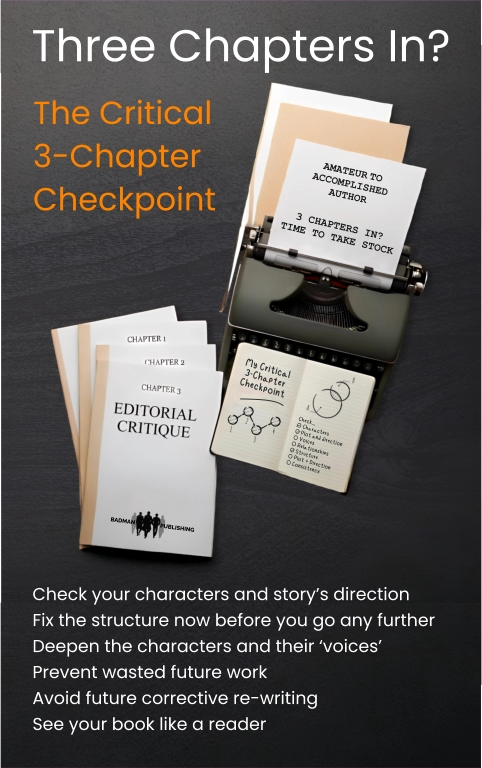
Need help getting started or refining your publishing plan?

At Badman Publishing, we understand that navigating the world of independent publishing can be overwhelming — especially when it comes to budgeting for professional services. That’s why we’re committed to making your journey smoother, more affordable, and more empowering.

Whether you're looking for editorial support, design expertise, publishing guidance, or marketing tools, we offer a range of services — many at low or no cost — tailored to indie authors like you. Our goal is to help you focus on what matters most: writing and sharing your story.

We’re here to support you. Reach out to us at Badman, or explore our resources and services pages to see how we can collaborate.

"Let’s bring your book to life — together."

Please feel free to share this page... Thanks :-)
Top Genres in Self-Publishing for 2025

Top Genres in Self-Publishing for 2025

[ 469 words. Approximately 4 minutes reading time.]

Top trending genres 2025

According to stats from Amazon KDP, Audible, and 2025 Genre Reports, these are the current trending genres and "micro-genres" in the world of independent publishing authors so far this year.

#1 Romance (32% of Sales)

Romance novels continue to dominate book sales. Dark romance appears to be especially popular right now. Mafia stories, bullying romances, and 'paranormal love' are trending big on TikTok at the moment, with hashtags like #DarkBookBoyfriend helping to drive this trend.

Audible is also seeing an increase in 'dark romance' audiobooks. 'Cosy and quirky' stories also do well. Books about baking grandmas are selling. Small-town romance novels also win many hearts. These 'cosy' books add over $2 million each month in direct sales.

#2 Fantasy (24% Market)

Fantasy books hold a strong place in the market. 'Romantasy' is a huge trend where magic is mixed with steamy romance. 67% of the top books blend these elements. Another growing area is LitRPG, short for literary role-playing game, which is a literary genre combining the conventions of computer RPGs with science-fiction and fantasy novels. Gamers appear to enjoy stories with levelling up. Skill trees and magic systems are also key. The LitRPG industry is currently worth $890 million!

#3 Sci-Fi (18% Growth)

Sci-fi books are growing in popularity. Climate stories are soaring right now. 'Solarpunk' thrillers are selling well. Eco-horror is also up 330% since 2022. Cozy space adventures also attract readers. These books feature low-stakes interstellar life. One book can make $4,000+ each month.

#4 Mystery/Thriller (15% Share)

Mystery and thriller books also have a solid share. Modern cozy mysteries are popular. These might feature grandma detectives. They might solve crypto crimes. Or they might tackle witchy cold cases. Tech terror also drives sales. AI villains are a common theme. CRISPR murders also appear in stories. These tech themes drive 73% of thriller pre-orders.

#5 Horror (12% Boom)

Horror books are booming, too. Stories about trauma are very popular. Books about mental health also do well. These outsell typical slasher stories. Monster romance is also a trend. Ethical werewolf love is popular. This attracts 33% of new horror readers.

Hidden Gems

Some niche genres are surprisingly successful. 'Dinosaur shifter' romance exists. And it makes $8.7 million each year. K-Drama books are also growing fast with embedded K-pop soundtracks helping this along. They drive 490% growth. 'African futurism' is also one to watch. Nigerian authors are leading the way.

Why are these genres winning?

Micro-Genres: Tiny niches (like cosy space opera) = loyal fans.  TikTok, Instagram, etc. are carrying 'bite-sized' chapters, and viral tropes are driving sales.

What can we conclude from this research? Readers appear to crave emotional, human stories. Niche + Authenticity = Sales!

| Write what you love, but use data to find your crowd!


 Visual Selection (8)

Acknowledgements, Credits & Hat-Tips

Header image created in-house.
Article author: Desktop Dan
Written in UK English so spelling may differ.

Next Steps...

Check out our writing and publishing guides in our member's resource library. 

Latest Resources for Free Members

  • Common mistakes made by self-publishing authors [Guide]
  • 8 Essential Steps to Format Your Book in MS Word [Guide]
  • How to use PowerPoint to Outline Your Book [Guide]
  • Outlining to create your manuscript [Guide]
  • Story Planning Checklist [Printable PDF]
  • Character Creation Checklist [Printable PDF]
  • Five Steps to Publishing. [eBook. & PDF]
  • The importance of book covers [Guide]
  • The Benefits of Blogging for Self Publishing Authors [Guide]
Please feel free to share this page... Thanks :-)
Ebooks and audiobooks continue to dominate in 2025

Ebooks and audiobooks continue to dominate in 2025

[1,265 words. Approximately 5 to 6 minutes reading time.]

The exponential growth of "Digital First" publications.

This article looks at the continued dominance of eBooks and audiobooks in 2025 and the factors that drives continued growth. This may help authors with their strategic thinking about formatting, sales and marketing.

 Visual Selection (7)According to researchers, the global eBook market is projected to reach $28.23 billion by 2028, growing at a compound annual growth rate (CAGR) of 4.8% from 2023. This growth is driven by several key factors, including the increasing adoption of digital technologies, the rising popularity of e-books among consumers, and the expanding availability of digital platforms for reading. Below are some of the factors helping to drive this growth.

Mobile-first reading habits.

Many readers now use phones. About 68% of readers under 35 like reading books on their phones. This change boosts eBook use.

Lower production costs.

eBooks are now cheaper to make. In 2020, formatting an eBook cost over $300. By 2025, it dropped to $75-$150. Lower costs help keep eBook prices down.

Instant global distribution.

eBooks can be sent around the world quickly. Amazon KDP lets publishers send eBooks to over 100 countries. This can happen within a day of publishing.

Improved book layouts.

Kindle Create 4.0 has new features. It can adjust eBook layouts for 27 kinds of devices. Users no longer need to change formatting by hand. This feature makes eBooks easier to read on any device.

The rise of subscription services.

Subscription models like Kindle Unlimited are changing how readers access books. These services allow readers to explore a vast library for a monthly fee, encouraging them to discover new authors and genres. This model not only benefits readers but also provides authors with a steady income stream.

Enhanced interactivity and multimedia.

eBooks are evolving beyond traditional text. Authors are now incorporating videos, audio clips, and interactive elements into their eBooks. This trend is creating a more engaging reading experience, appealing to a wider audience and attracting younger readers who seek dynamic content.

The role of social media in eBook promotion.

Platforms like Instagram and TikTok are becoming essential tools for authors to promote their eBooks. Bookstagram and BookTok communities are thriving, allowing authors to reach potential readers directly and share their work in creative ways. This shift is reshaping marketing strategies in the publishing industry.

The Exponential Growth Of Digital First Publications Chart By Badman Publishing

Acknowledgements, Credits & Hat-Tips

Header image created in-house.
Article author: Desktop Dan
Article is written in UK English so spelling may differ.

Next Steps

Check out our writing and publishing guides in our member's resource library. 

Latest Resources for Free Members

  • Common mistakes made by self-publishing authors [Guide]
  • 8 Essential Steps to Format Your Book in MS Word [Guide]
  • How to use PowerPoint to Outline Your Book [Guide]
  • Outlining to create your manuscript [Guide]
  • Story Planning Checklist [Printable PDF]
  • Character Creation Checklist [Printable PDF]
  • Five Steps to Publishing. [eBook. & PDF]
  • The importance of book covers [Guide]
  • The Benefits of Blogging for Self Publishing Authors [Guide]
Please feel free to share this page... Thanks :-)
How long does it take to write a novel?

How long does it take to write a novel?

The time needed for an author to write a fiction novel varies significantly based on several factors.

We understand that most authors who write full-time typically spend about two to six months to complete their first draft. This time frame can vary based on several factors, including the author's writing habits, experience, and the complexity of the story. Some authors may have a clear vision and write quickly, while others might require additional time to organize their thoughts or develop their characters.

Every writer has a unique process. For some, the initial draft is just the beginning of refining their ideas. They might work best with a structured schedule, dedicating specific hours each day to focus solely on writing. Others may prefer a more flexible approach, allowing inspiration to guide them.

In addition, the genre of the book may influence how long it takes to finish the draft. A novel with intricate plots, multiple characters, or detailed world-building can demand more time than a straightforward narrative. Authors often find themselves revisiting and revising sections, which adds to the overall duration.

Every writer understands that the first draft is not the final product. It serves as a foundation for future revisions, edits, and improvements. Therefore, whether it takes two months or six, the goal remains the same - to create a solid draft that can evolve into a polished piece of work.

The further time needed to complete the manuscript with revisions would take an estimated six months to two years depending on the number of words and the revision methods used.

Professional authors tend to write to deadlines, often completing books in three to twelve months. Part-time writers may take two to five years.

Timeline For Writing A Novel An Article By Badman Publishing

There are a number of factors affecting the whole writing timeline.

  • What is the author's writing experience?
  • The amount of time available if not dedicated or scheduled to writing every day.
  • The length of the novel is another time factor. A novel is typically 70,000-100,000 words.
  • Is there any research involved? Historical novels such as "The Bootlegger" by self-published author Keith Lawson, required a considerable amount of research, background reading, contacting third parties with questions, etc.
  • The novel's revision process, third-party reviews, corrections, re-writing, and improvements will also take a fair time to complete.

It's said that Stephen King typically writes first drafts in 3-4 months, while George R.R. Martin has spent over 10 years on recent books.

In conclusion, there's no universal timeline - each author and book has different requirements, and all the time spent is conducive to an excellent and well received novel.

Acknowledgements, Credits & Hat-Tips

Header image created in-house using a licensed original image by XXXXXXXXX
Article author: Badman Publishing Team

Next Steps

Check out our writing and publishing guides in our member's resource library. 

Latest Resources for Free Members

  • Common mistakes made by self-publishing authors [Guide]
  • 8 Essential Steps to Format Your Book in MS Word [Guide]
  • How to use PowerPoint to Outline Your Book [Guide]
  • Outlining to create your manuscript [Guide]
  • Story Planning Checklist [Printable PDF]
  • Character Creation Checklist [Printable PDF]
  • Five Steps to Publishing. [eBook. & PDF]
  • The importance of book covers [Guide]
  • The Benefits of Blogging for Self Publishing Authors [Guide]
Please feel free to share this page... Thanks :-)
Writing “The Bootlegger of Illinois”

Writing “The Bootlegger of Illinois”

My journey from inspiration to research and publication.

In writing my first ever fiction book, I took a very leisurely approach (no contracts, deadlines or publisher chasing me). So as not to lose the idea, I jotted down some notes as to the plot and some ideas about the storyline. One was that Jesse would be a veteran and have some military skills and Sheriff Buckley would feel beholden to him for trying to save his son.

When I went back to my notes, I decided on an ambush from cover of the gangsters visiting Jesse's farm, so it was logical to make him a WW1 sniper. That was all I had when, in the UK lockdown for the Corona Virus (Covid19), I picked up the excellent Nicholas Rankin's “Churchill's Wizards – The British Genius for Deception 1914-1945 (Faber & Faber 2008). This wasn't research – just my interest in military history. In the first part of the book, the amazing Hesketh-Prichard appeared – an advocate for sniping and founder of the Sniping, Observation and Scouting school. From that piece of serendipity I found (free online from the Open Library) Prichard's own publication “Sniping in France – with notes on the scientific training of scouts, observers and snipers” 1920 Hutchinson & Co.  What had been intended as an explanation for Jesse's skills with a rifle, became a bigger part of the book as I incorporated the SOS experience into the story.The Bootlegger Of Illinois On Tablet And Print From Dadman Publishing

As my writing developed, I saw that I needed more on the Chicago crime scene of the 1920s, as writing about Jesse's and Buck's region would not fill the book. Luckily, I found another excellent book “Al Capone's Beer Wars – a complete history of organized crime in Chicago during prohibition” by John H. Binder (pub Prometheus 2017). This helped correct many misconceptions I had from reading books years ago and watching movies. A big surprise was the youth of the mobsters – many in their twenties or only just in their thirties.

I am extremely grateful to Mr Binder for informing me about the Whiskey Rebellion (Western Pennsylvania 1791), the Lager Beer riots (Chicago 1855) and that by 1917 thirteen states had gone “dry” due to the Temperance movement, but that did not mean all were alcohol free, some having a prosperous illegal trade. In 1906 residents of Chicago drank nearly three times more than the national average. It confirmed, for me, that I had a workable plot.

Another book that proved invaluable was “Mr Capone” by Robert J. Schoenberg (pub Robson Books, 1992). Short of going to Chicago (which would have been fantastic) I had to rely on immersing myself in good histories.

I’d finished a draft, the complete story told but still needing the embellishment to keep the reader interested, when I picked up “The Mafia – the first 100 years” by William Balsamo & George Carpozi Jr (pub Virgin Books – Penguin – 1988). Apart from being slightly horrified that the title suggests we’ll have the Mafia for another 100 years, I did draw comfort for Sean O’Leary’s actions at the end with this statement:

“It is axiomatic in some sectors of the underworld community that revenge is sweeter when it is not taken against the person who committed the harm…..the theory is, it is better instead to take the life of someone near and dear to him.”

To keep me in the period, I noted the big events of each year on a page before the action and decided not to delete when I completed the story, as I felt they added background, especially for you, the reader, who may not be versed in American history. However, on another rewrite and some feedback from Beta readers, I did delete.

While working on the drafts, I was also reading the excellent “Forensics – The anatomy of crime” by one of my favorite authors – Val McDermid. I do recommend this to any fan of crime fact or fiction. It is so superior to the memoirs I had recently read by a pathologist. It jogged my memory about Edmond Locard (who first came to my notice in the Lincoln Rhymes series of books by Jeffery Deaver) and also Song Ci, whom I had read about in a fictionalized story of him, plus an episode of BBC's Silent Witness. That gave me material to fill out more of Jesse's back history and his skill at deleting evidence.

As an afterthought, I wonder if “whisky chasers” originated during Prohibition, the legally produced “near beer” being boosted by neat alcohol in a process known as “needling.” Just a thought.

Keith Lawson

Copies To The Mob MuseumYou are welcome to download and read a chapter of "The Bootlegger of Illinois" free of charge

Just click on the image below to download the PDF which we hope you will enjoy.

Acknowledgements & Hat Tips

Authors: Keith Lawson (Authors page
Images: Images created inhouse
Further reading:
- Publication page with links to where to purchase
- Reader Reviews on goodreads.com and The Mommies Reviews

Free chapter of The Bootlegger of Illinois

The Bootlegger Of Illinois On Tablet And Print From Dadman PublishingExplore the story of two men with different ideals and purposes but both strong and courageous trying to survive and prosper in prohibition era American state of Illinois.

When their worlds meet, violence is unleashed. Jesse has to pushback against the mobsters and bloodshed in his neighbourhood has him travelling to the City to deal with the mob boss to protect his friends.

Please feel free to share this page... Thanks :-)
Who wrote the earliest dystopian novel?

Who wrote the earliest dystopian novel?

The earliest dystopian novel

220px Weyevgenyzamyatin

The earliest dystopian novel is generally considered to be "We" by Russian author Yevgeny Zamyatin, published in 1924. This novel predates well-known dystopian works like Aldous Huxley's "Brave New World" (1932) and George Orwell's "Nineteen Eighty-Four" (1949)

Yevgeny ZamyatinYevgeny Zamyatin is said to have drawn from his experiences living through the Russian Revolution and the early Soviet regime. The novel was completed in 1920 and was initially banned in the Soviet Union due to its critical stance on totalitarianism and collectivist ideologies. It was first published in English in 1924, making it one of the earliest known dystopian novels.
The Plot

"We" is set in a highly controlled future society called the One State, ruled by a dictator known as the Benefactor. The story is narrated by D-503, a mathematician and chief engineer of the spaceship Integral, designed to conquer and bring enlightenment to other planets. In the One State, citizens, referred to as Numbers, live under strict regulations with every aspect of their lives controlled, including their personal relationships.

The plot revolves around D-503's growing disillusionment with the One State as he becomes involved with a revolutionary group led by I-330, a woman who introduces him to ideas of individuality and rebellion. Through his interactions with I-330, D-503 begins to question the ideals of the One State and grapples with concepts of freedom and humanity.

Critical themes explored

"We" explores several critical themes that have become staples of dystopian literature:

    • Totalitarianism:
      "We" portrays a society where the state exerts complete control over every aspect of life, suppressing individuality and enforcing conformity.
    • Surveillance:
      The "One State" employs constant surveillance to maintain control, a theme that resonates with later works like George Orwell's "Nineteen Eighty-Four."
    • Individuality vs. Collectivism:
      D-503's struggle represents the conflict between individual freedom and the collective will imposed by the state.
    • The Role of Technology:
      "We" also highlights how technological advancements can be used to manipulate and control society.

The Literary Effect

"We" is not only a pioneering work in dystopian literature but also a critical commentary on the political and social dynamics of Zamyatin's time. Its innovative narrative style and exploration of dystopian themes have secured its place as a foundational text in the genre. (Unknown)

It appears that "We" had a profound influence on later dystopian works. Aldous Huxley's "Brave New World" and George Orwell's "Nineteen Eighty-Four" both appear to draw inspiration from Zamyatin's portrayal of a dystopian future. Orwell even acknowledged the impact of "We" on his writing.

Acknowledgements & Hat Tips

Authors: The Badman Publishing team ©
Image: Featured image by Desktop Dan
Further reading: More about "We" at Wikipedia and "The Week" Magazine

Free chapter of The Bootlegger of Illinois

The Bootlegger Of Illinois On Tablet And Print From Dadman PublishingExplore the story of two men with different ideals and purposes but both strong and courageous trying to survive and prosper in prohibition era American state of Illinois.

When their worlds meet, violence is unleashed. Jesse has to pushback against the mobsters and bloodshed in his neighbourhood has him travelling to the City to deal with the mob boss to protect his friends.

Please feel free to share this page... Thanks :-)
How many books have authors sold on Amazon?

How many books have authors sold on Amazon?

How successful is an author on Amazon?

Did you know that you can estimate the number of book sales on Amazon for free using various online tools that convert the book’s Best Sellers Rank (BSR) into sales figures. These tools provide a good approximation of sales based on the BSR, which is updated frequently by Amazon.

Web based tools

There are a number of online tools including the following most popular (with links)

BookBeam
This tool allows you to input the BSR of a book and select the marketplace and format to estimate daily and monthly sales.
Visit BookBeam

Kindlepreneur
Similar to BookBeam, this calculator lets you enter the BSR and choose the book format and marketplace to get an estimate of sales.
Visit Kindlepreneur

TCK Publishing
This tool also converts the BSR into estimated sales figures for both eBooks and print books.
Visit TCK Publishing
 

How to use

To use these tools, all you have to do is follow these easy steps:

  • Find the BSR: Go to the book’s Amazon page and scroll down to the “Product Details” section to find the Best Sellers Rank.
  • Enter the BSR: Copy the BSR and paste it into the calculator on one of the websites mentioned above.
  • Select the Marketplace and Format: Choose the appropriate options for the book’s marketplace (e.g., Amazon US, UK) and format (eBook, paperback, etc.).
  • Get the Estimate: Click the “Estimate” button to see the estimated daily and monthly sales.

Acknowlegements & Hat Tips

Authors: The Badman Publishing team ©
Image: DesktopDan using an original image by master1305 under licence

Free chapter of The Bootlegger of Illinois

The Bootlegger Of Illinois On Tablet And Print From Dadman PublishingExplore the story of two men with different ideals and purposes but both strong and courageous trying to survive and prosper in prohibition era American state of Illinois.

When their worlds meet, violence is unleashed. Jesse has to pushback against the mobsters and bloodshed in his neighbourhood has him travelling to the City to deal with the mob boss to protect his friends.

Please feel free to share this page... Thanks :-)